


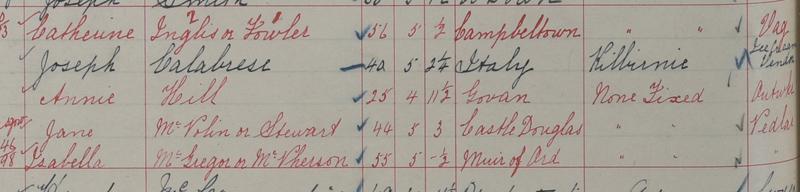

ASTONISHING records of shocking Ayrshire murder cases from the late 1800s and early 20th century have been released to the public.
Government body Scotland's People has just released official prison records from across the country - with cases from the old Ayr court highlighted.
They focus on three people condemned to death for murder but reprieved - even though one of them had begged to face the hangman.
This week, we take a look at the first of the three case files - a man who murdered his wife and three children.

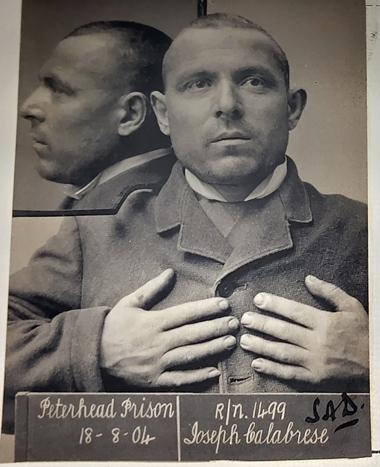
Joseph Calabrese was born in Naples in 1868 and came to Scotland to become an ice cream vendor in the Garnock Valley. He married Jessie McKenna in Kilbirnie in 1897, moved to Dalry and the couple had four children by 1903 - Minnie, Tommy, John and Lucinda. They would return to Kilbirnie around that time.
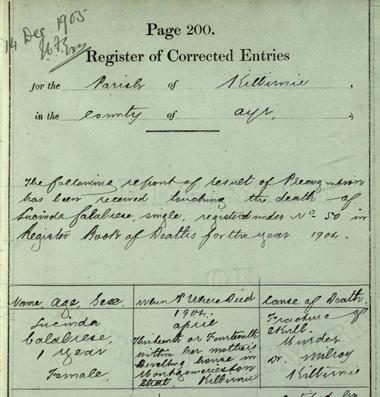
Sadly, Jessie was an alcoholic. On the evening of April 14, 1904, she was helped home from Joseph’s ice cream shop by mill worker Catherine Taggart around 10pm.
Catherine put the children to bed and left around midnight. Joseph had returned home between 12 and 1am. He rose from bed multiple times to feed and calm their youngest child, Lucinda. When he asked Jessie for help, he stated that she had reacted angrily at having been woken and swore at him.
Joseph then murdered his wife and their children.
The records state: "On being examined on May 8 by Professor Glaister, a forensic scientist, general practitioner and police surgeon, Joseph recounted that his wife had threatened to split his head with a hatchet, but instead she hit his chest with the blunt end.
"An argument ensued. The couple had had a fractious relationship and during periods of drunkenness, Jessie had often antagonised Joseph with the taunt that he was not the father of his children.

"On the fateful night of the murder, the children were woken by the fighting and got into bed with their mother, throwing coal at Joseph. The two eldest, together with their mother, shouted at him that he was not their father."
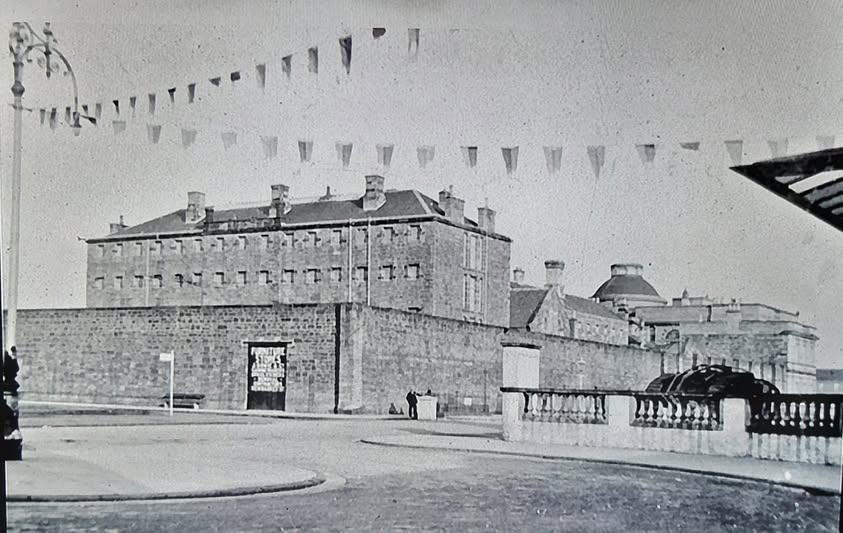
In a rage, Joseph grabbed the hatchet and murdered his family. Afterwards he got dressed and reported himself to the police. He was sent to Ayr Prison - now the County Buildings.
At the trial at the High Court in Glasgow, Dr Naismith, surgeon to the County Hospital and Prison of Ayr, was called for the defence.
He had Joseph under his care in the jail and believed that, when he was admitted, he was not responsible for his actions.
Dr Naismith argued that Jessie’s "cruel taunts and bad behaviour to him over a sustained period of time had led to him developing irresistible homicidal impulses".
The jury deliberated for just 30 minutes. Joseph was found to be unanimously guilty of murder -however, the jury recommended him to mercy on the grounds of extreme provocation.
That didn't influence the judge, Lord Adam, who passed a death sentence. Joseph seemed to be "confused" by the decision.
He was sent to the condemned cell at Ayr Prison to await his fate.

A file held by the National Records of Scotland (NRS) records Joseph’s emotional state following the trial.
It reads: "Calabrese is labouring under the delusion that he was to be executed on the 6th. He says that we are waiting to get an opportunity when he is sleeping to kill him. He also declares that he will not go to sleep lest we do kill him.
"Calabrese [was] restless and slept none in the night of the 6th and was under the delusion that he would be executed if he slept. Calabrese on the night of the 7th [was] restless and talked a great deal about being executed if he slept and wished it to be done quickly or he would do it himself. He slept from 1am to 2.50am and was quiet after."
A petition was sent to the Scottish Secretary, Right Honourable Andrew Graham Murray, K.C, to appeal the sentence of execution.
It repeated Dr Naismith's claims that Calabrese: "Acted under an irresistible homicidal impulse produced by the long-continued and constant provocation which he had received from his wife, and the misery which she had by her drunken and theftuous conduct caused him during the whole period of their married life, resulting in the ruin of his whole career, and especially the oft-repeated accusations of want of virility, and taunts regarding the paternity of the children, with which she not only herself reproached him, but taught the elder children to repeat."
Dr Landels Rose Oswald, physician superintendent at the Royal Asylum, stated that Joseph may have suffered from ‘mental epilepsy’ and that the murder of the young children, clearly loved by him, indicated a weakness of mind amounting to insanity.

On July 27, 1904 the Provost of Ayr received a letter confirming that the capital penalty had been commuted to penal servitude for life.
The Provost Bailie Thomas Allan and the governor of the prison visited Joseph in his cell to relay the news to him.
He replied: "Thank you very much."
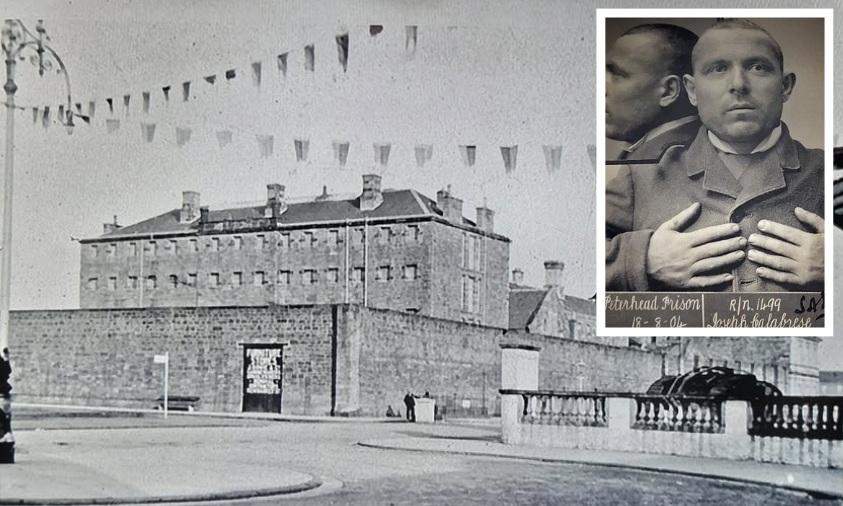
Calabrese was sent to Peterhead Prison and was released in August 1914. His conduct and industry in prison was reported to have been ‘good’. He returned to Italy at the end of the year to live out the rest of his life in Venafro.
Look out for another Ayrshire murder case from the Scotland's People records next weekend.


Share